
Guides · Reconstitution & handling
Bacteriostatic water is the diluent most commonly used to reconstitute research peptides. It looks like ordinary water, but one ingredient — a small amount of benzyl alcohol — makes it suitable for vials that are punctured and used more than once. Understanding what it is, and how it differs from plain sterile water, prevents a lot of avoidable mistakes.
What is bacteriostatic water?
Bacteriostatic water for injection is sterile water that contains 0.9% benzyl alcohol as a preservative. “Bacteriostatic” means growth-inhibiting, not bacteria-killing: the benzyl alcohol stops any contaminating microbes from multiplying, which is exactly what you want in a vial you will draw from repeatedly over days or weeks.
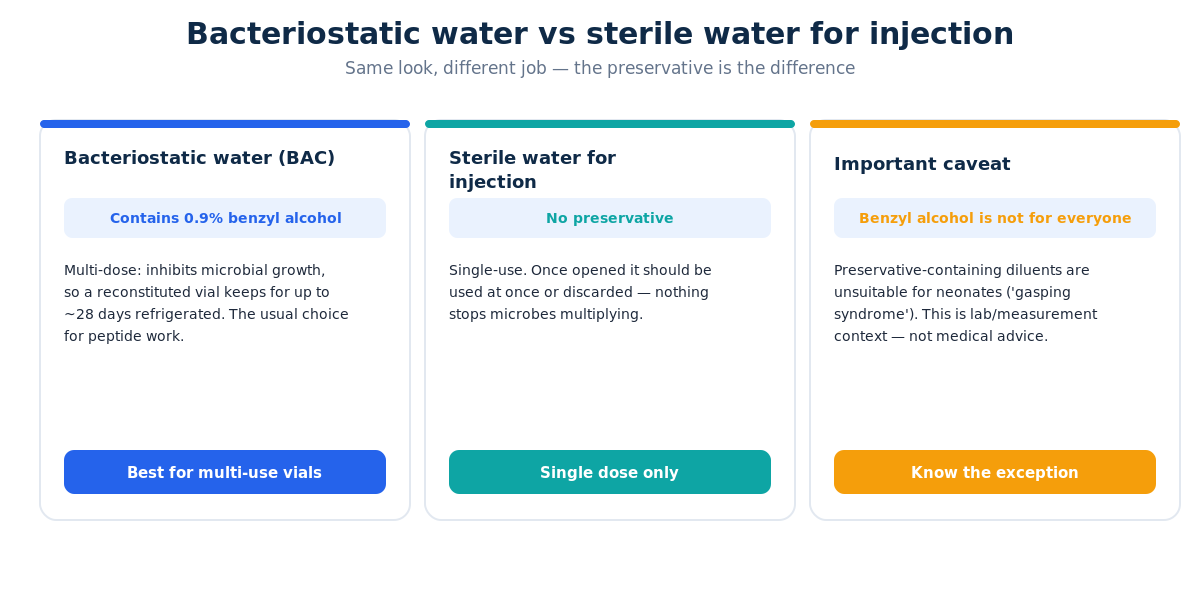
Bacteriostatic water vs sterile water for injection
The two are easy to confuse but are used differently:
- Bacteriostatic water — contains 0.9% benzyl alcohol; designed for multi-dose use. A reconstituted vial can typically be used for up to about 28 days when refrigerated. This is the usual choice for peptide reconstitution.
- Sterile water for injection (SWFI) — contains no preservative; intended for single use. Once opened it should be used at once or discarded, because nothing prevents microbial growth.
Why the choice of water changes your shelf life
Because bacteriostatic water suppresses microbial growth, a peptide reconstituted with it generally keeps far longer in the refrigerator than one mixed with plain sterile water. That is the practical reason most reconstitution guides and calculators assume bacteriostatic water as the default diluent.
How water volume sets concentration
Bacteriostatic water does more than rehydrate the powder — the amount you add determines the concentration of the finished solution. The same vial can be made strong or dilute depending on how much water you use.
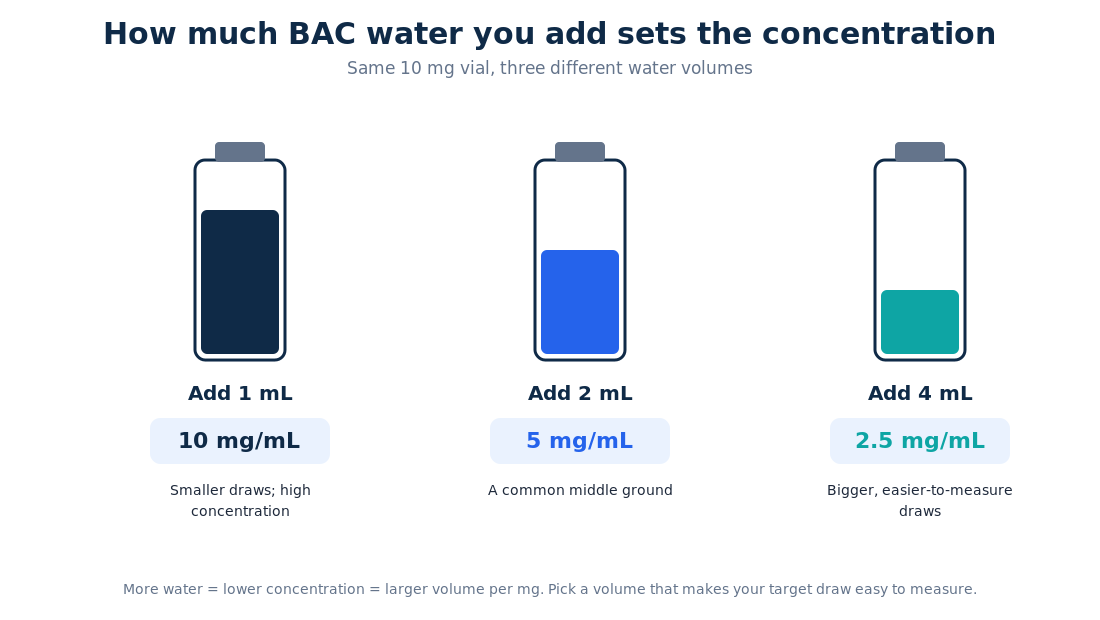
For a 10 mg vial:
- 1 mL → 10 mg/mL (concentrated; small draws)
- 2 mL → 5 mg/mL (a common middle ground)
- 4 mL → 2.5 mg/mL (larger, easier-to-measure draws)
Choose a volume that makes your target measurement easy to read on the syringe. Our BAC water calculator tells you how much water to add to hit a chosen concentration, and the reconstitution calculator shows the resulting draw volumes.
Storing and handling bacteriostatic water
- Store the bottle at room temperature unless the label says otherwise, away from direct light.
- Swab the stopper with 70% alcohol before each draw and let it dry.
- Use a fresh sterile needle for every draw; do not leave a needle parked in the stopper.
- A multi-dose bottle of bacteriostatic water is generally considered good for about 28 days after first puncture; label it with the date you opened it.
- Discard if the water looks cloudy or contains particles.
Frequently asked questions
Is bacteriostatic water the same as sterile water?
No. Bacteriostatic water contains 0.9% benzyl alcohol and is for multi-use vials; sterile water for injection has no preservative and is single-use.
How long is bacteriostatic water good after opening?
A multi-dose bottle is generally considered good for about 28 days after first puncture when stored and handled properly. Label it with the date you opened it.
Does the water I choose affect concentration?
The type of water does not change concentration, but the volume you add does: concentration = mg in vial ÷ mL of water added.
References
- Mountainside Medical — Bacteriostatic Water vs Sterile Water for Injection
- Empower Pharmacy — Bacteriostatic Water for Injection
- WHO Best Practices for Injections and Related Procedures (NCBI Bookshelf)
Informational only. This guide is for educational and laboratory/measurement purposes and is not medical advice. It does not recommend or instruct personal human use. Consult a qualified healthcare professional for any health decision. Content is intended for adults 21+. Verify scientific details against the primary sources cited.