
Guides · Reconstitution & handling
Sterile (aseptic) technique is the set of habits that keep microbes out of a vial while you work with it. Reconstitution and storage protect the peptide molecule; sterile technique protects the solution from contamination. The principles below are drawn from established safe-injection guidance from the CDC and WHO, applied here to handling and measurement.
Why aseptic technique matters
Every time a vial is opened or punctured, there is an opportunity for contamination. Bacteriostatic water slows microbial growth, but it is not a substitute for clean technique — it buys time, it does not sterilise. Good aseptic habits keep a multi-use vial usable for its full window and prevent the cloudy, particle-laden solutions that have to be thrown away.
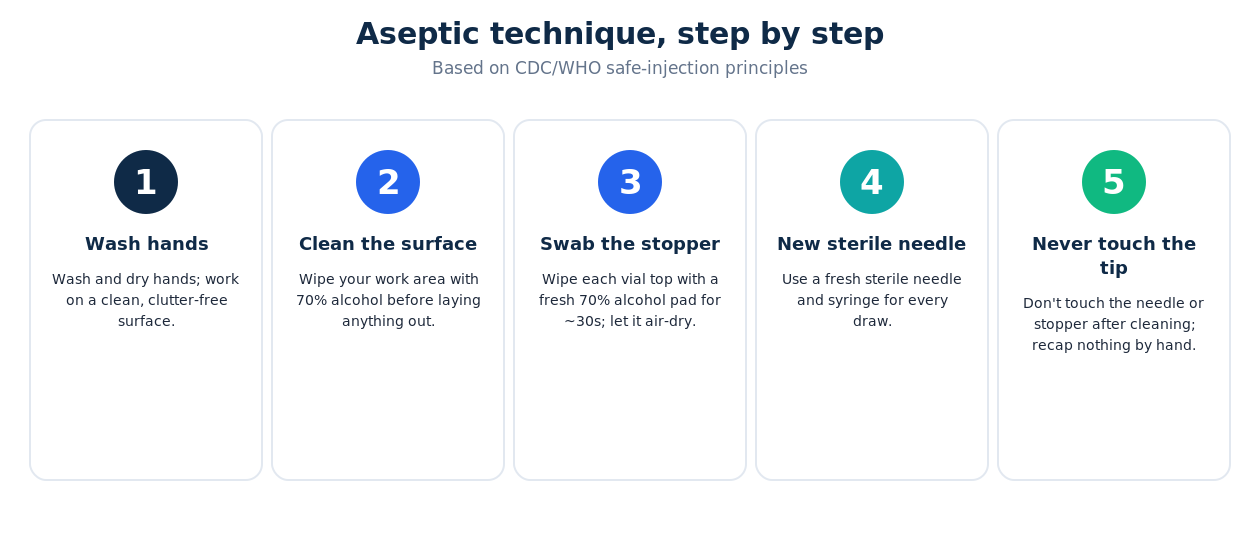
The core sequence
- Wash your hands. Wash and dry thoroughly, or use an alcohol-based hand rub, before you start.
- Prepare a clean surface. Wipe an uncluttered work area with 70% alcohol and lay out your supplies.
- Swab the stopper. Wipe each vial’s rubber stopper with a fresh 70% alcohol pad and let it air-dry — about 30 seconds. The drying step is when the alcohol actually does its work; wiping a wet stopper and immediately puncturing it skips the disinfection.
- Use a new sterile needle and syringe for every draw. Do not reuse them between draws or between vials.
- Do not touch the tip. Keep the needle and the cleaned stopper untouched by fingers, clothing or surfaces.
Hand hygiene and the work area
- Hands are the most common source of contamination — clean them first and avoid re-contaminating them.
- Work in a clean, dry, draft-free area away from food and clutter.
- Keep alcohol pads, sterile needles and a sharps container within reach before you begin so you are not fumbling mid-task.
Multi-dose vials: do and don’t
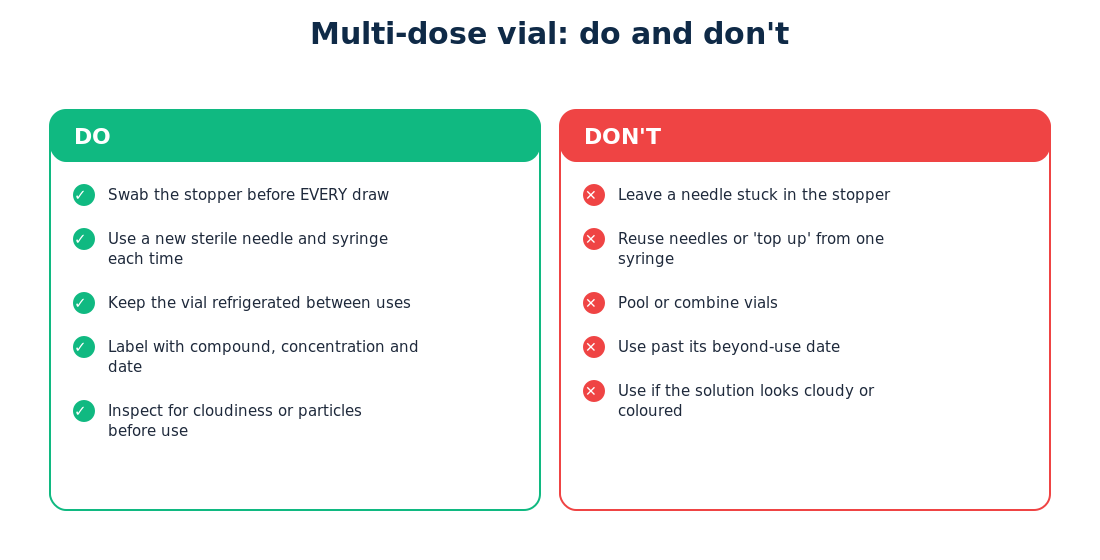
A reconstituted peptide vial is effectively a multi-dose vial, so the standard rules apply:
- Do swab the stopper before every draw, use a new sterile needle each time, keep it refrigerated, label it, and inspect it before use.
- Don’t leave a needle stuck in the stopper, reuse or “top up” needles, pool or combine vials, use a vial past its window, or use any solution that looks cloudy or discoloured.
Sharps and disposal
Used needles are a hazard. Do not recap by hand; place them straight into a rigid, puncture-resistant sharps container, and dispose of that container according to your local regulations. Never put loose needles in household waste.
Putting it together
Sterile technique is not complicated, but it is unforgiving of shortcuts. Combine it with correct reconstitution and proper storage, and a vial stays clean, accurate and usable for its full life. When in doubt about whether a solution is still good, inspect it — and if it looks off, discard it.
Frequently asked questions
How long should I let the alcohol dry on the stopper?
About 30 seconds. The drying time is when the alcohol disinfects, so do not puncture a wet stopper.
Do I really need a new needle for every draw?
Yes. Reusing needles dulls them and raises contamination risk. Use a fresh sterile needle and syringe for each draw.
How do I dispose of used needles?
Place them directly into a rigid, puncture-resistant sharps container without recapping by hand, and dispose of it per local regulations.
References
- CDC — Injection Safety / Safe Injection Practices
- WHO Best Practices for Injections and Related Procedures (NCBI Bookshelf)
Informational only. This guide is for educational and laboratory/measurement purposes and is not medical advice. It does not recommend or instruct personal human use. Consult a qualified healthcare professional for any health decision. Content is intended for adults 21+. Verify scientific details against the primary sources cited.