
The Thymus Gland and Thymic Peptides Explained
The thymus gland trains your T cells and secretes thymic peptides like thymosin alpha-1 and thymosin beta-4. What it does, why it shrinks, and what the evidence really shows.
The thymus gland trains your T cells and secretes thymic peptides like thymosin alpha-1 and thymosin beta-4. What it does, why it shrinks, and what the evidence really shows.
Meet the pineal gland and melatonin — the hormone of darkness. How light sets the clock, why melatonin is not a peptide, and where Epitalon fits in.

503A and 503B are two distinct legal compounding pathways under the FD&C Act. Here is how they differ and where research peptides and GLP-1s currently stand.
How four tiny glands and the peptide hormone PTH hold blood calcium steady — and why a bone-loss hormone became an osteoporosis drug.
How the endocrine pancreas works: the islet cell types, the insulin–glucagon balance, C-peptide and amylin, and why the incretins GLP-1 and GIP are gut hormones, not islet hormones.
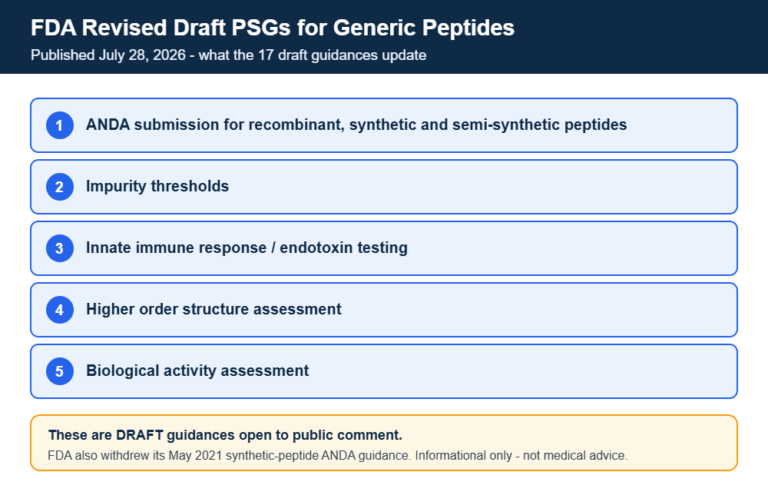
The FDA published 17 revised draft product-specific guidances for generic peptide products on July 28, 2026, updating impurity, endotoxin and structure recommendations.
How the adrenal glands work: the three cortical zones and their steroids, the catecholamine-making medulla, what controls cortisol, and the melanocortin link to research peptides.
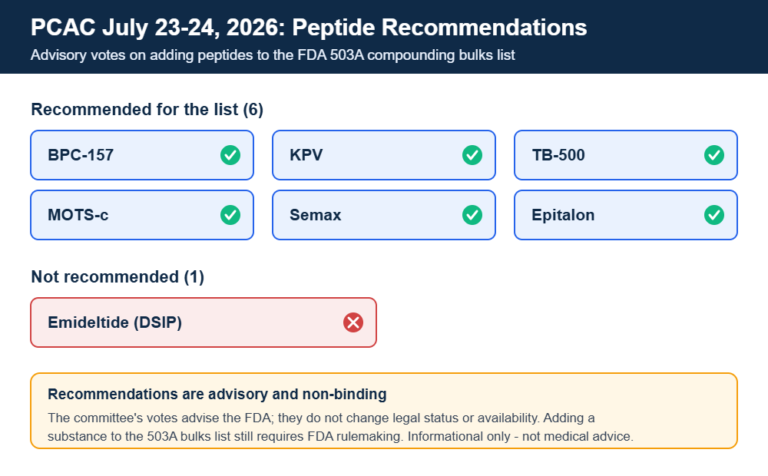
An FDA advisory committee recommended six of seven peptides, including BPC-157 and TB-500, for the 503A compounding bulks list at its July 2026 meeting.
How the hypothalamus links the brain and the endocrine system — its releasing hormones, the two routes to the pituitary, and why research peptides target it.
JAK-STAT signaling lets a cytokine or hormone change which genes a cell switches on, through a borrowed kinase. Here is how the pathway works, its JAKs and STATs, and which hormones use it.