CGRP Explained: The Migraine Peptide and the Drugs That Block It
CGRP is a 37-amino-acid sensory peptide that can trigger migraine. How it got its name, why its receptor needs two proteins, and what the eight approved CGRP drugs do.
CGRP is a 37-amino-acid sensory peptide that can trigger migraine. How it got its name, why its receptor needs two proteins, and what the eight approved CGRP drugs do.
Orexin, also called hypocretin, is the hypothalamic peptide that stabilises wakefulness – discovered twice in 1998, lost in narcolepsy, and now targeted by drugs in both directions.
Cholecystokinin (CCK) empties the gallbladder, releases pancreatic enzymes and signals fullness. Learn how this gut hormone coordinates digestion and satiety.
Secretin was the first hormone ever discovered. Learn how it neutralizes stomach acid with pancreatic bicarbonate and why its 1902 discovery created the word hormone.
Gastrin is the hormone that signals the stomach to make acid. Here is how G cells, parietal cells and a somatostatin feedback loop keep it balanced.
Substance P is an 11-amino-acid sensory peptide behind pain, inflammation and nausea. Meet the tachykinin family, its NK receptors, and the drugs that block them.
Endorphins, enkephalins and dynorphins are the body’s own opioids. How the three families work, which receptors they hit, and the truth about the runner’s high.
Oxytocin is a nine-amino-acid hormone behind childbirth and milk let-down. Here is what it is, how it works, and what the love-hormone evidence really shows.
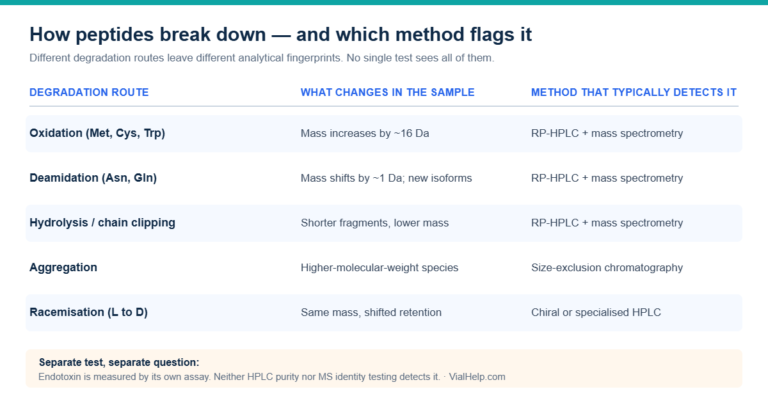
A 2026 review in Separation Science Plus surveys peptide analysis methods and names LC–MS/MS the gold standard for quantification. How chromatographic purity, mass-spectrometric identity and stability testing answer different questions.
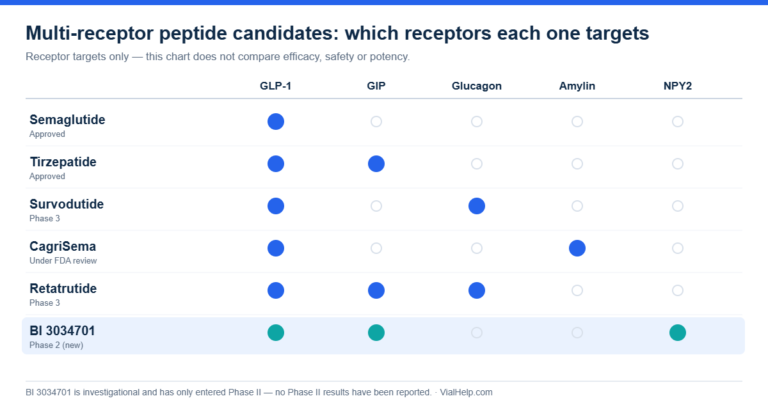
Boehringer Ingelheim says its investigational GLP-1/GIP/NPY2 triple receptor agonist BI 3034701 has entered Phase II development for obesity. What the company announced, and what a Phase II start does and does not mean.