
Amylin Peptide Side Effects: Pramlintide & Cagrilintide
Peptide side effects series
Amylin peptide side effects cluster around two themes: gastrointestinal upset — especially nausea — and, when an amylin analog is paired with insulin, a real risk of low blood sugar. Peptides like pramlintide and the investigational cagrilintide copy a natural hormone your pancreas releases alongside insulin, so understanding what amylin does explains where its side effects come from.
What are amylin peptides?
Amylin (also called islet amyloid polypeptide, or IAPP) is a 37–amino-acid hormone co-secreted with insulin by the beta cells of the pancreas after a meal. It helps regulate blood sugar by slowing how fast the stomach empties, suppressing the hormone glucagon, and promoting a feeling of fullness. Two engineered amylin analogs are widely discussed: pramlintide (brand name Symlin), which is FDA-approved as a mealtime add-on to insulin, and cagrilintide, a long-acting analog in development for weight management — most prominently as the amylin half of the combination CagriSema.
How amylin peptide side effects arise
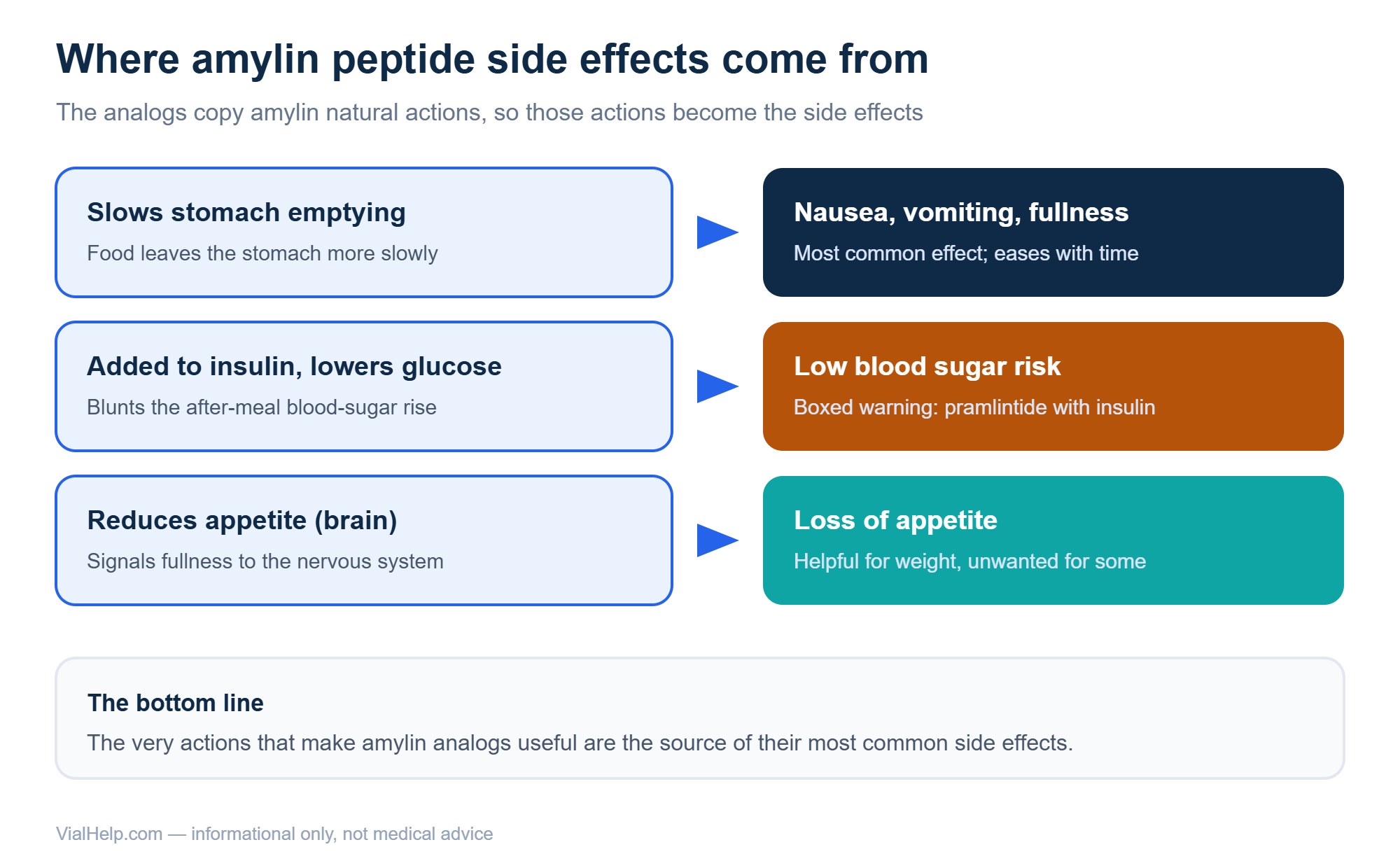
Because these analogs reproduce amylin’s natural actions, their side effects are largely an extension of those actions:
- Slowed gastric emptying is the same mechanism that drives satiety — but pushed harder it produces nausea, vomiting, and early fullness, the most common complaints.
- Blood-sugar lowering matters most for pramlintide, which is taken with insulin; if the insulin dose is not reduced, the combination can unmask insulin-induced hypoglycemia.
- Appetite suppression in the brain reduces food intake — therapeutic for weight, but sometimes unwanted anorexia.
Pramlintide (Symlin): documented side effects
Pramlintide’s FDA prescribing information carries a boxed warning: used with insulin, it increases the risk of insulin-induced severe hypoglycemia, particularly in type 1 diabetes, and that risk is greatest within the first three hours after an injection. Because a severe low could occur while driving or operating machinery, the label directs clinicians to cut mealtime insulin doses by 50% when starting pramlintide.
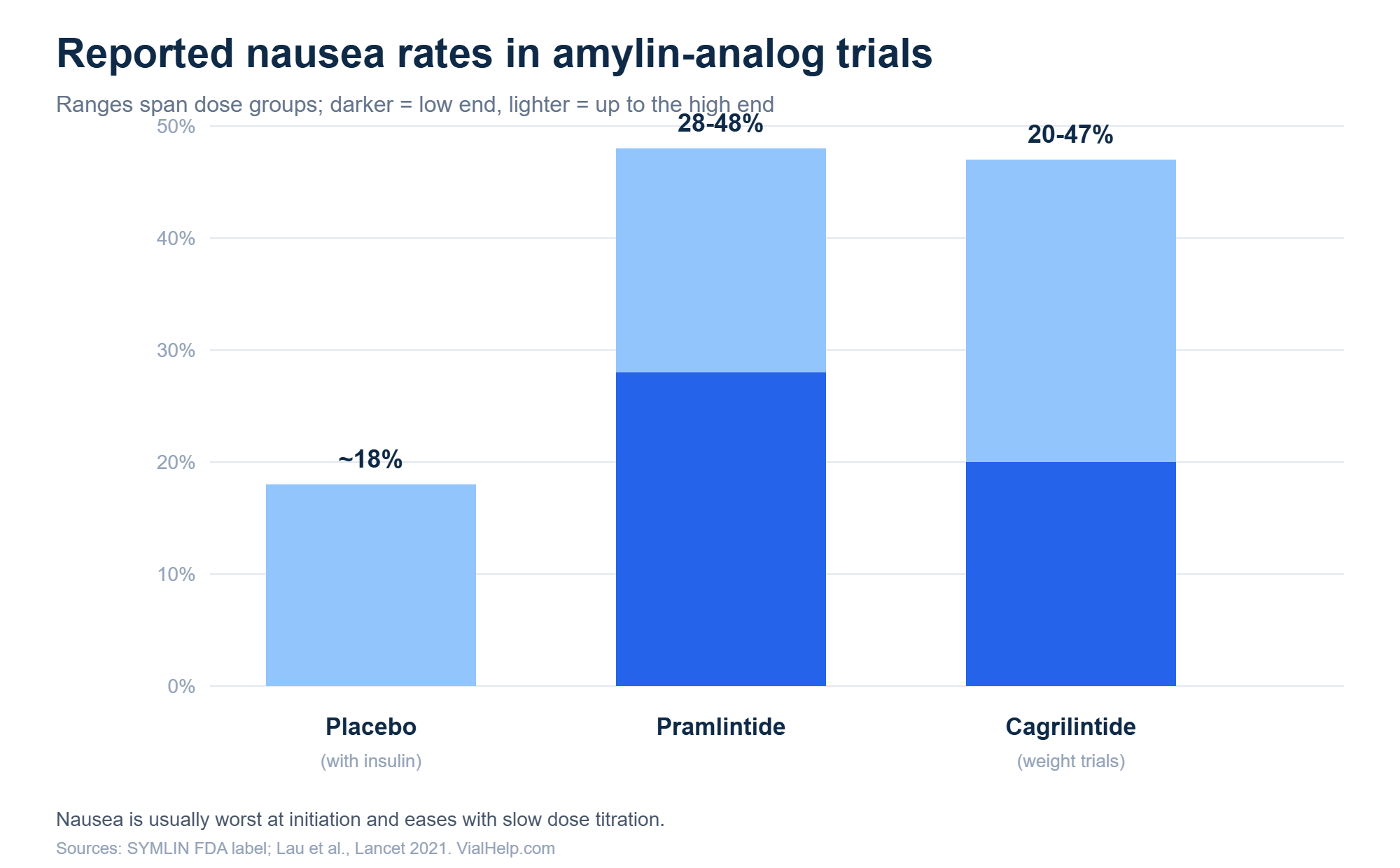
The most common non-hypoglycemic side effect is nausea, reported in roughly 28–48% of users in trials; it is usually worst early and often eases with time and gradual dose titration. Other reported effects include vomiting, abdominal pain, decreased appetite, headache, fatigue, and injection-site reactions. Pramlintide must never be mixed in the same syringe as insulin — it is given as a separate subcutaneous injection at a different site.
Cagrilintide and CagriSema: what trials report
Cagrilintide is investigational and not FDA-approved. In a phase 2 dose-finding trial (Lau and colleagues, The Lancet, 2021), the most frequent side effects were gastrointestinal — nausea, constipation, and diarrhea — plus administration-site reactions. Gastrointestinal events occurred in about 41–63% of cagrilintide groups versus 32% on placebo, with nausea in roughly 20–47% versus 18%. Most events were mild to moderate. In combination programs — cagrilintide plus semaglutide (CagriSema), studied in phase 2 and the phase 3 REDEFINE trials — the profile is again dominated by gastrointestinal symptoms, consistent with stacking two appetite-suppressing mechanisms. Because cagrilintide is generally studied without background insulin, insulin-driven hypoglycemia is less central to its profile.
What the human evidence shows
Pramlintide has years of real-world use and a well-characterized label, so its side effects are well documented. Cagrilintide’s safety picture is still forming through ongoing trials, and long-term data — especially for the CagriSema combination — continues to accumulate. As with any peptide, product quality is its own variable: research-grade material obtained outside a pharmacy carries no guarantee of identity, purity, or endotoxin control, which can introduce risks unrelated to the molecule itself. Reading a Certificate of Analysis is a basic safeguard.
Cautions and considerations
- Amylin analogs are prescription or investigational compounds; this page is informational, not a recommendation to use them.
- Hypoglycemia is the headline risk when pramlintide is combined with insulin.
- Gastrointestinal side effects are common but usually dose- and time-dependent.
- Purity and endotoxin content of non-pharmaceutical material are real, separate risks — verify with a COA.
Frequently asked questions
Do amylin peptides cause weight-loss side effects?
Appetite reduction is intended in weight programs, but it can tip into unwanted nausea or anorexia. Gastrointestinal upset is the most common effect that limits how high a dose people tolerate.
Is nausea from amylin analogs permanent?
Usually not. It is typically worst at initiation and eases with slow dose titration. Persistent or severe symptoms warrant medical review.
Why does pramlintide carry a hypoglycemia warning while cagrilintide is discussed less for it?
Pramlintide is taken with mealtime insulin, so it can amplify insulin’s glucose-lowering effect. Cagrilintide is generally studied without background insulin.
Are amylin and GLP-1 side effects the same?
They overlap heavily — both cause nausea via slowed gastric emptying — which is why amylin–GLP-1 combinations tend to magnify gastrointestinal effects.
- SYMLIN (pramlintide acetate) Prescribing Information — U.S. FDA
- Pramlintide: Uses, Side Effects & Warnings — Drugs.com
- Lau et al. Once-weekly cagrilintide for weight management (phase 2), The Lancet 2021 — PubMed
- Cagrilintide 2.4 mg plus semaglutide 2.4 mg in type 2 diabetes (phase 2), The Lancet 2023
- Coadministered cagrilintide and semaglutide (CagriSema), NEJM 2025
Informational only — not medical advice; consult a qualified healthcare professional. For adults 21+.