
GHK-Cu Side Effects: Copper Peptide Safety, Explained
Peptide side effects series
GHK-Cu side effects are, for most people using topical copper-peptide skincare, mild and uncommon — the bigger safety gap is that injected GHK-Cu has almost no human data behind it. GHK-Cu is a naturally occurring copper-binding tripeptide, and how you use it — on the skin versus injected — changes the safety picture completely.
What is GHK-Cu?
GHK-Cu is the copper(II) complex of the tripeptide glycyl-L-histidyl-L-lysine (GHK). GHK occurs naturally in human plasma, saliva, and urine; plasma levels are around 200 ng/mL at age 20 and fall to about 80 ng/mL by age 60. It binds copper readily, and the resulting GHK-Cu complex has been studied for wound healing, skin remodeling, and hair. In consumer products it appears in serums and creams; in research settings it is sometimes handled as a lyophilized powder for reconstitution. For verified chemistry and references, see our GHK-Cu Library page.
GHK-Cu side effects with topical use
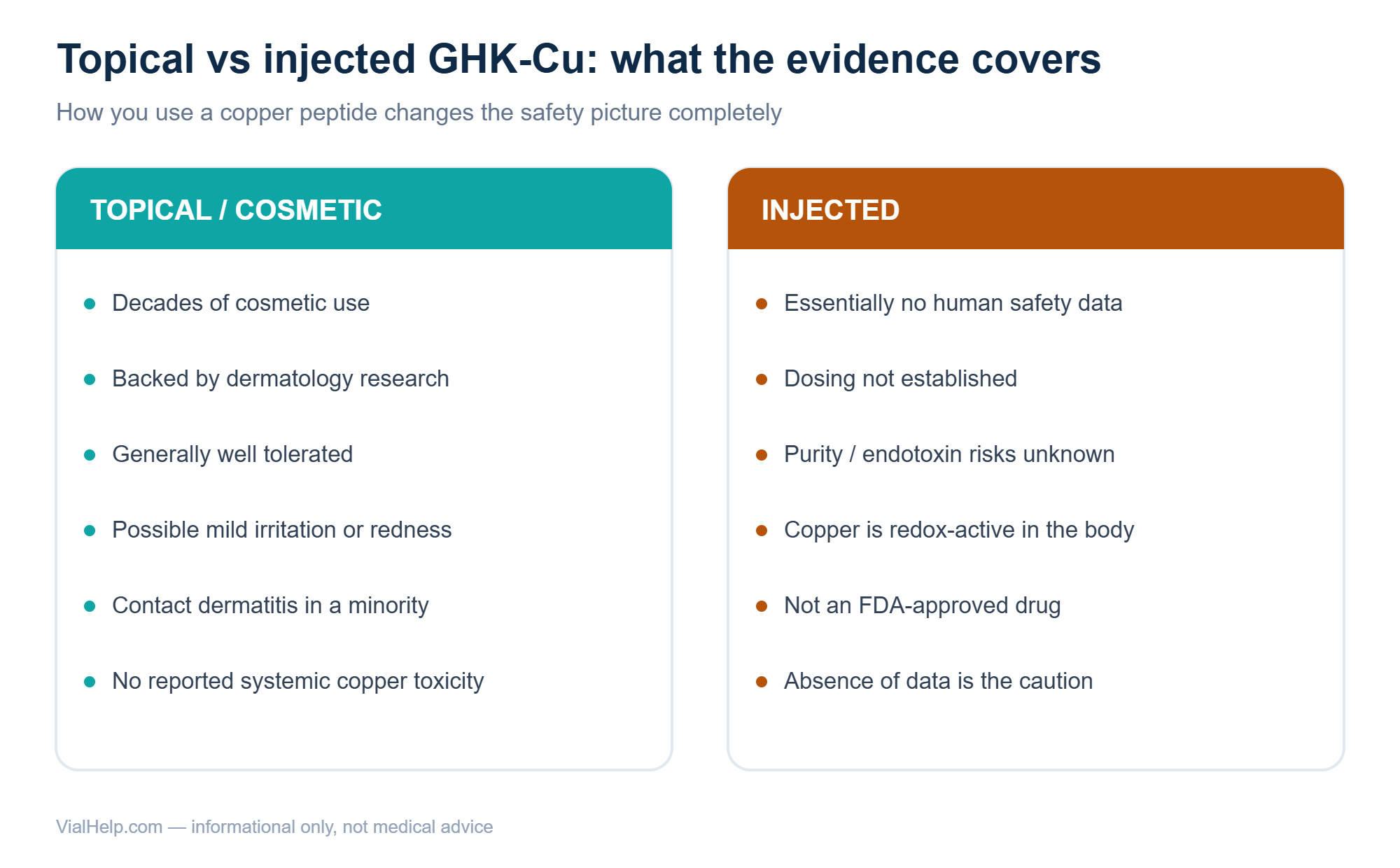
Decades of cosmetic use and dermatology research suggest topical GHK-Cu is generally well tolerated. Reported issues are the kind common to many active skincare ingredients:
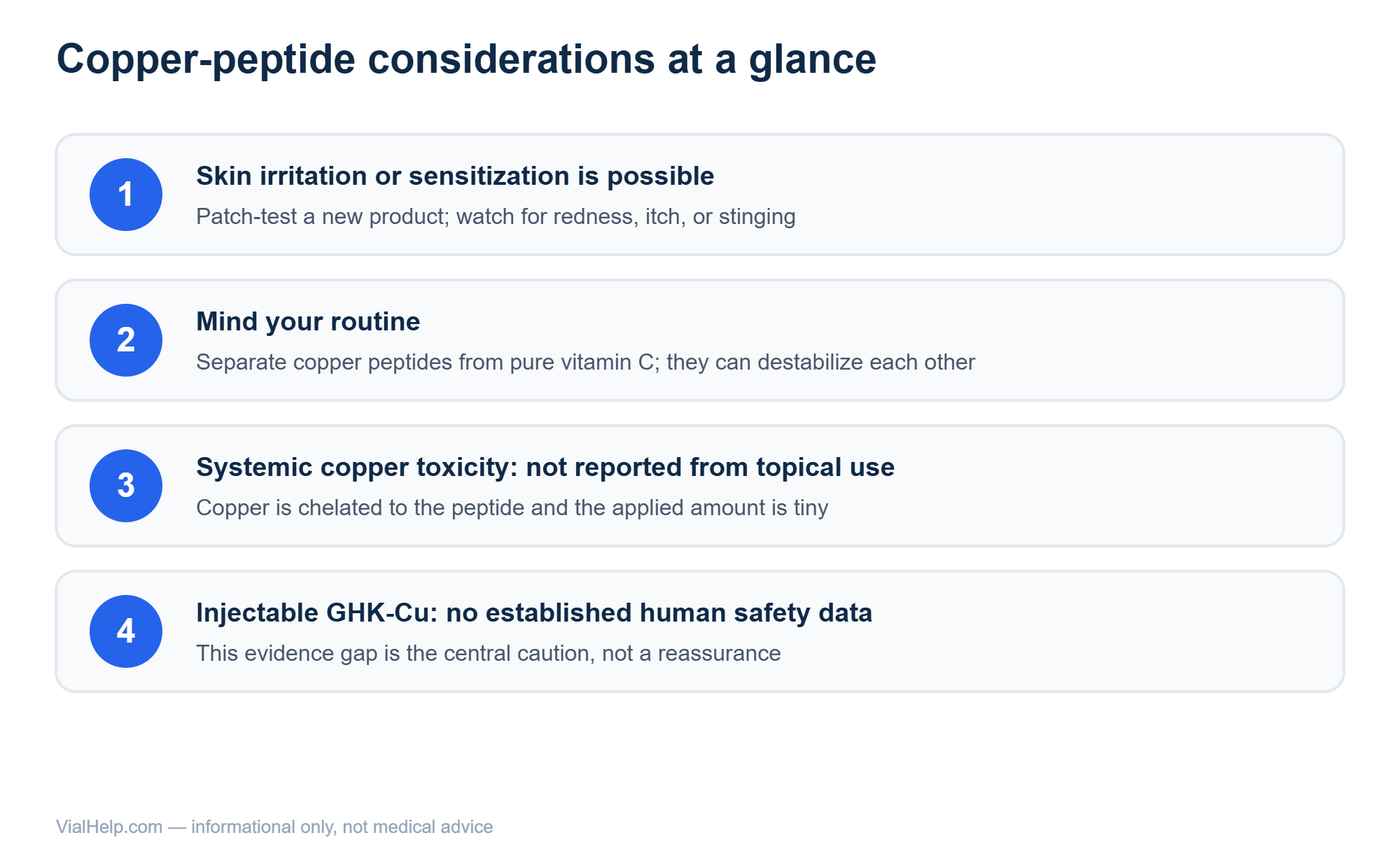
- Skin irritation — redness, itching, or a stinging sensation, especially on sensitive or compromised skin.
- Contact dermatitis or sensitization in a minority of users.
- Routine interactions — copper peptides and direct vitamin C (ascorbic acid) can destabilize each other, and layering with strong exfoliating acids or retinoids can increase irritation.
Systemic copper toxicity from topical products has not been reported in the clinical literature: the copper is chelated to the peptide, the applied amount is tiny, and it is used locally by skin cells.
Injected GHK-Cu: the evidence gap
This is the critical distinction. The favorable safety record above is for topical and cosmetic use. Injected GHK-Cu in humans has essentially no controlled safety data — dosing, purity requirements, and adverse-effect rates are not established. Copper is biologically active and, in excess, can be pro-oxidant, so introducing a copper complex by injection is not equivalent to smoothing a serum onto skin. Anyone encountering “GHK-Cu for injection” should treat the absence of human safety data as the central caution, not a reassurance.
What the research shows
Most GHK-Cu literature is preclinical (cell and animal studies) or focused on topical formulations, summarized in review articles by Pickart and Margolina. These support GHK-Cu’s regenerative signaling and a benign topical profile, but they are not the same as large, long-term human safety trials for injection. GHK-Cu is not an FDA-approved drug. As always, material bought outside a regulated pharmacy varies in identity, purity, and endotoxin load — independent of the molecule’s own profile.
Cautions and considerations
- Topical: patch-test; expect possible mild irritation; avoid layering directly with pure vitamin C.
- Injected: no established human safety data — the biggest unknown.
- Copper is redox-active; more is not better.
- Verify any research material with a Certificate of Analysis; store per the most fragile component.
Frequently asked questions
Are copper peptides safe for daily skincare?
For most people they are generally well tolerated topically. Patch-test first and watch for irritation, especially on sensitive skin.
Can GHK-Cu cause copper toxicity?
Systemic copper toxicity has not been reported from topical use — the copper is chelated and the dose is tiny. Injection is a different, unstudied scenario.
Can I use GHK-Cu with vitamin C or retinol?
Separate copper peptides from direct vitamin C, since they can destabilize each other. Introduce alongside retinoids or acids cautiously to limit irritation.
Is injectable GHK-Cu backed by research?
Human safety data are essentially absent; most evidence is preclinical or based on topical use.
Informational only — not medical advice; consult a qualified healthcare professional. For adults 21+.