
How to Dispose of Needles & Sharps Safely (FDA Guide)
Handling & safety guide
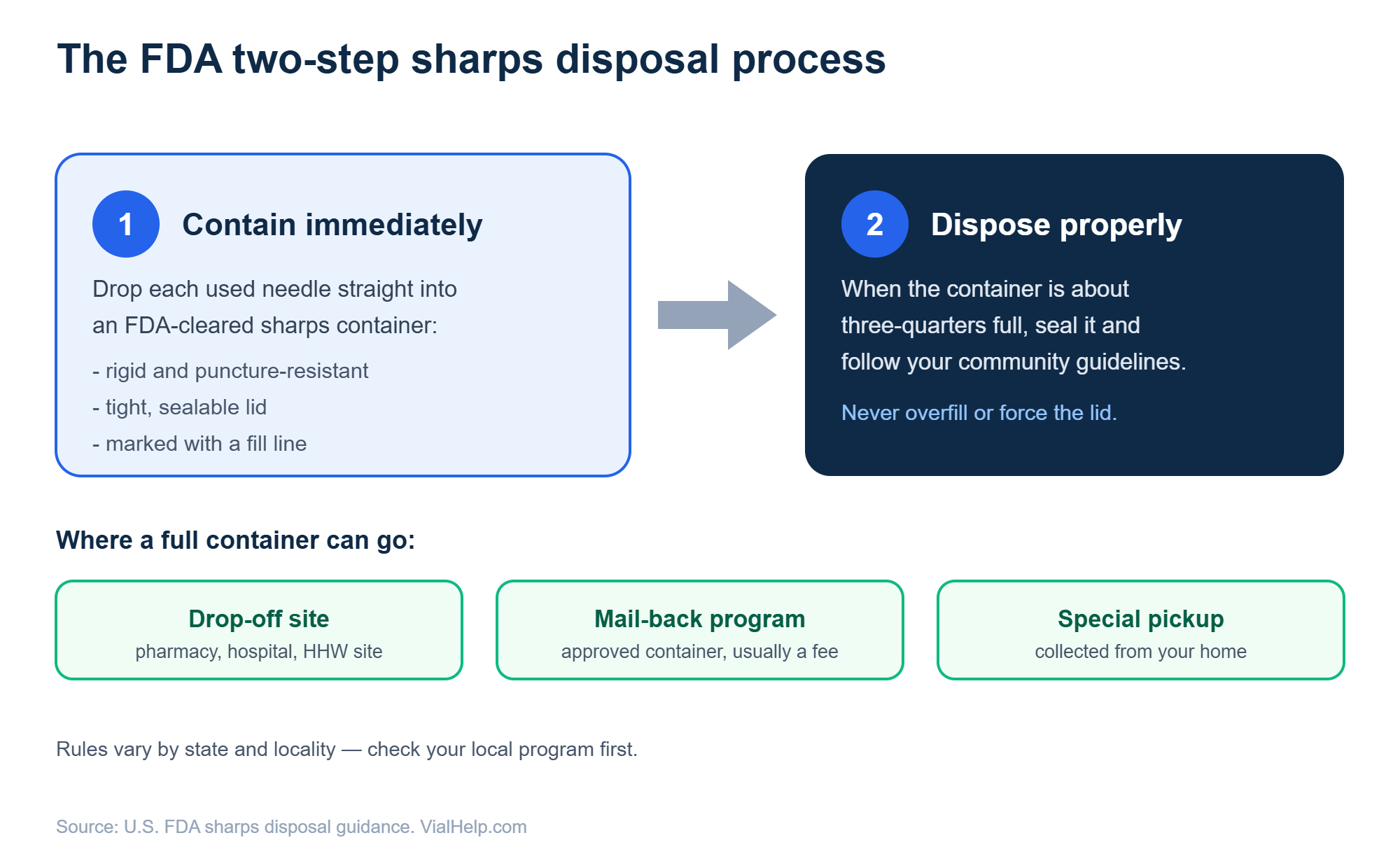
How to dispose of needles safely comes down to a simple FDA two-step process: drop every used needle or syringe straight into a proper sharps container, then get that container to an approved disposal site when it is about three-quarters full. Loose needles in household trash or recycling put sanitation workers, family, and pets at risk of needle-stick injuries.
Why sharps disposal matters
“Sharps” means any device that can pierce skin — needles, syringes with attached needles, lancets, and auto-injectors. Used sharps can carry blood and, potentially, bloodborne pathogens, so a stray needle in the trash or a recycling bin is a genuine hazard to waste handlers and to anyone who empties a bin at home. Proper disposal is about physically containing the point until it reaches a facility equipped to destroy it.
How to dispose of needles: the FDA two-step process
Step 1 — Contain immediately. Place each used needle or sharp directly into an FDA-cleared sharps disposal container right after use. These are rigid, puncture-resistant plastic containers with a tight, sealable lid and a fill line, sold at pharmacies, medical-supply companies, and online. If you cannot get one right away, some community guidelines allow a heavy-duty plastic household container — leak-resistant, kept upright, with a tight puncture-resistant lid (a laundry-detergent jug is the classic example) — as a temporary stand-in.
Step 2 — Dispose properly. When the container is about three-quarters full, seal it and follow your community’s guidelines. Never overfill it or force the lid.
Disposal options for a full container
Because rules vary by state and locality, check your local program first. Common options the FDA lists include:
- Household hazardous-waste collection sites or events.
- Mail-back programs, where certain FDA-cleared containers are shipped to a facility (usually for a fee).
- Special waste pickup services that collect containers from your home.
- Drop-off sites at hospitals, pharmacies, health departments, or medical-waste facilities.
Directories such as Safe Needle Disposal maintain state-by-state listings of drop-off and mail-back options.
Common mistakes to avoid
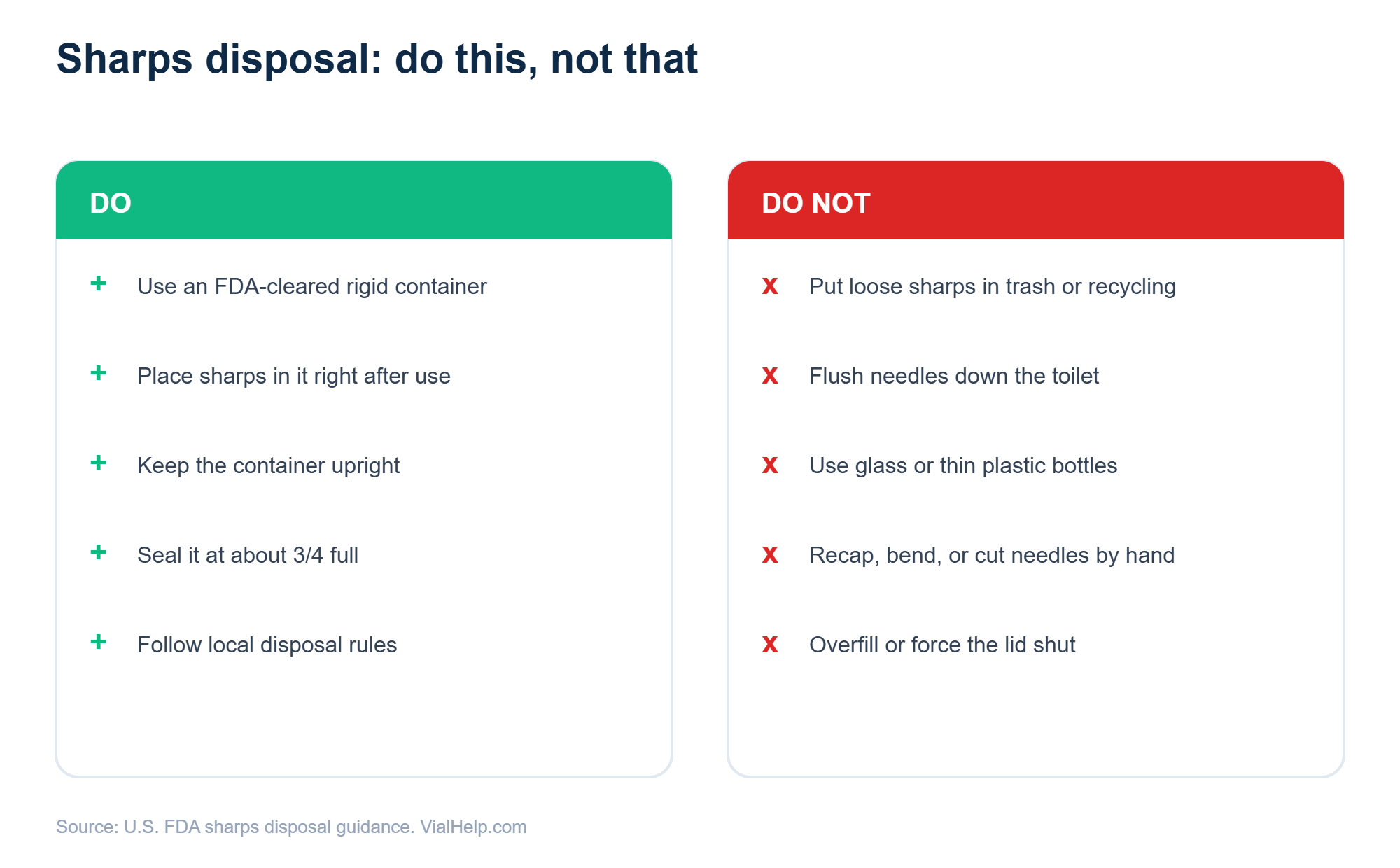
- Putting loose sharps in trash, recycling, or down the toilet.
- Using glass bottles or thin plastic (soda bottles) that needles can pierce.
- Overfilling past the fill line, or forcing the lid.
- Recapping, bending, or clipping needles by hand.
- Storing a full container within reach of children or pets.
Frequently asked questions
Can I throw needles in the regular trash?
No. Loose needles do not belong in household trash or recycling. Use a sharps container and an approved disposal route.
What can I use if I do not have a sharps container?
As a temporary measure, some guidelines allow a heavy-duty, leak- and puncture-resistant plastic container with a tight lid. Replace it with an FDA-cleared container as soon as you can.
When is a sharps container full?
At about three-quarters full. Seal it then rather than packing it to the brim.
Where can I drop off a full sharps container?
Options include household hazardous-waste sites, pharmacies, health departments, mail-back programs, and special pickup services. Check local rules or a directory like Safe Needle Disposal.
Informational only — not medical advice; consult a qualified healthcare professional. For adults 21+.