FDA Advisory Panel Recommends Six of Seven Peptides for 503A Compounding
In a closely watched FDA peptide compounding vote, the agency’s Pharmacy Compounding Advisory Committee (PCAC) recommended six of seven peptides for the 503A bulk drug substances list at its July 23-24, 2026 meeting. The recommendations cover several compounds that are widely discussed in the research community, but the votes are advisory only and do not change any product’s legal status.
What the committee recommended
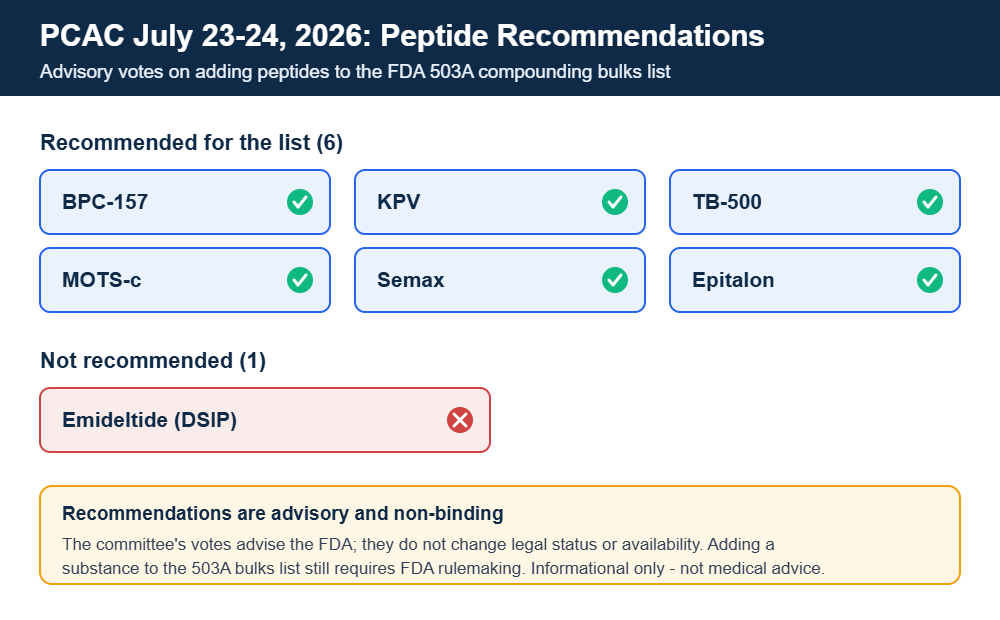
Over the two-day meeting, PCAC voted in favor of adding BPC-157, KPV, TB-500 (thymosin beta-4), MOTS-c, Semax and Epitalon to the list of bulk drug substances that 503A pharmacies may use in compounding. According to reporting by the Regulatory Affairs Professionals Society (RAPS), each of these recommendations passed by a narrow margin, with several votes decided by only one or two members and multiple abstentions. The committee declined to recommend one compound, emideltide (delta sleep-inducing peptide, or DSIP), which RAPS reported was voted down.
The panel diverged from FDA staff
The recommendations are notable because they went against the assessments of FDA’s own reviewers. Ahead of the meeting, agency staff had recommended against adding the peptides under review, as covered in our earlier report on the FDA staff recommendations. Advisory committees offer independent input, and their members are not obligated to follow staff conclusions.
What “recommended” does and does not mean
A PCAC recommendation is one step in a longer process. The votes are non-binding advice to the FDA; on their own they do not place any substance on the 503A bulks list, approve any product, or make any compound available. Adding a bulk drug substance to the list still requires the FDA to proceed through notice-and-comment rulemaking, which typically takes many months and can reach a different outcome. The vote does not establish the safety or effectiveness of any compound for any use.
Why this matters for the research community
The 503A pathway governs patient-specific compounding by licensed pharmacies and is separate from the research-chemical market. For readers who follow peptide science, the meeting is a useful marker of how U.S. regulators are weighing a group of compounds that have drawn growing interest alongside limited human data. VialHelp will continue to track the FDA’s next steps as the process unfolds.
Share this article
For informational and educational use only — not medical advice. Intended for adults 21+.