
Peptide Antibiotics: Vancomycin and Daptomycin Explained
Peptide science
Peptide antibiotics are antibacterial drugs built from amino-acid chains, and two of the best known are vancomycin, a glycopeptide, and daptomycin, a cyclic lipopeptide. Both are derived from bacteria, both are used for serious Gram-positive infections, and they kill bacteria in different ways.
What are peptide antibiotics?
Most discussion of peptides focuses on hormones and signaling molecules, but some of the most important peptide-based medicines are antibiotics. They are natural products of bacteria that were developed into drugs. The two classes covered here, glycopeptides and lipopeptides, are used mainly against Gram-positive bacteria, including strains that resist other antibiotics.
Vancomycin: the glycopeptide antibiotic
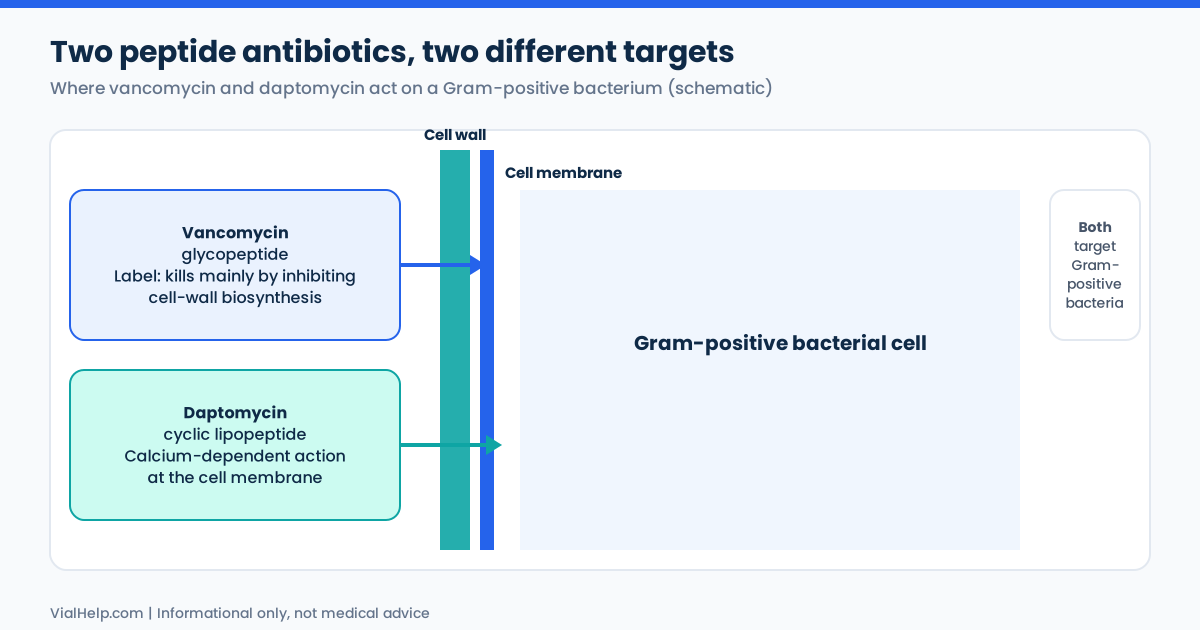
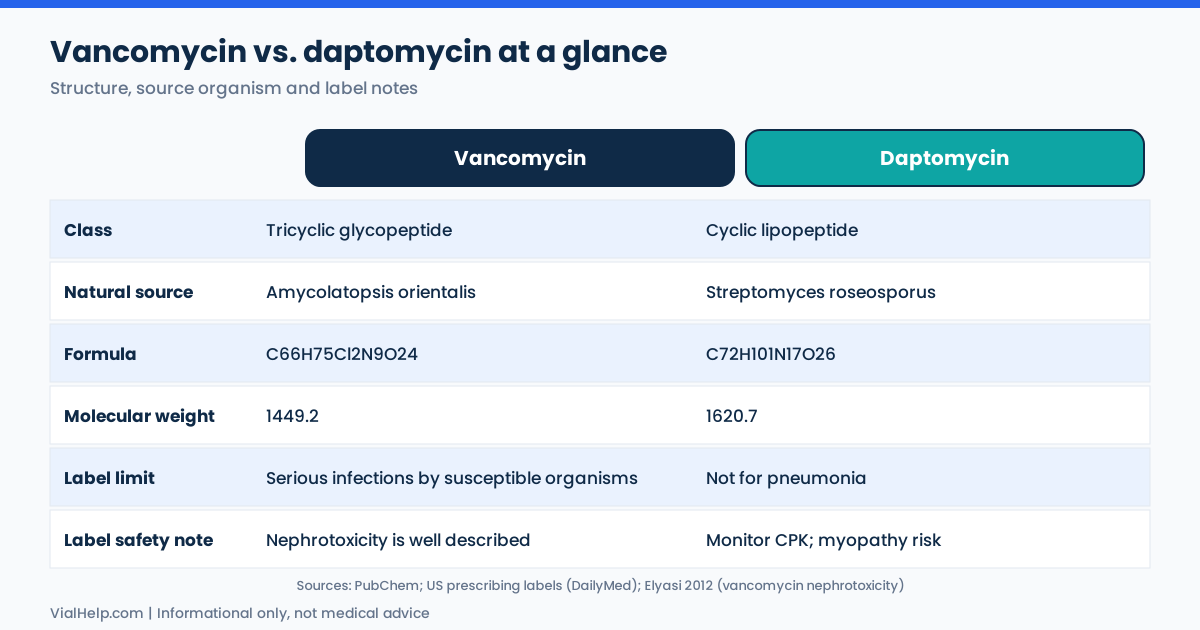
The US prescribing label describes vancomycin as a tricyclic glycopeptide antibiotic derived from Amycolatopsis orientalis (formerly Nocardia orientalis). Its molecular formula is C66H75Cl2N9O24, with a molecular weight of 1449.2 (PubChem). The label states that its bactericidal action results primarily from inhibition of cell-wall biosynthesis, and that it also alters bacterial cell-membrane permeability and RNA synthesis. It is not active in vitro against Gram-negative bacilli, mycobacteria or fungi.
The injectable label lists serious or severe infections caused by susceptible strains of methicillin-resistant (beta-lactam-resistant) staphylococci, and use in penicillin-allergic patients or those who cannot receive or have failed other drugs. Nephrotoxicity (kidney injury) is a well-described and well-studied adverse effect, reviewed in detail by Elyasi and colleagues in 2012.
Daptomycin: the cyclic lipopeptide
Daptomycin is a cyclic lipopeptide derived from the fermentation of Streptomyces roseosporus; its chemical name begins with an N-decanoyl group, the fatty-acid tail that makes it a lipopeptide. The label gives the formula as C72H101N17O26 and the molecular weight as 1620.67. A 2004 commentary in Chemistry & Biology called it the first lipopeptide antibiotic to reach the clinic.
Research on its mechanism describes a calcium-dependent action at the bacterial cell membrane; one 2021 binding study examined the phospholipid specificity behind that calcium dependence. A 2016 review notes activity specific to Gram-positive organisms, including MRSA and vancomycin-resistant enterococci, and also notes that resistance can emerge during therapy.
Peptide antibiotics compared: vancomycin vs. daptomycin
Their label limits illustrate how mechanism and site of action shape clinical use. Daptomycin is labeled for complicated skin and skin-structure infections and for Staphylococcus aureus bloodstream infections, but the label states it is not indicated for pneumonia or for left-sided infective endocarditis due to S. aureus. It also carries warnings for myopathy and rhabdomyolysis (with CPK monitoring) and for eosinophilic pneumonia.
Handling note: reconstituted antibiotics are clinical preparations
The vancomycin label describes a lyophilized powder that is reconstituted with Sterile Water for Injection to 50 mg/mL (pH 2.5 to 4.5), is oxygen sensitive, and requires further dilution before intravenous use. It is a useful example of how lyophilized peptide-type drugs are prepared under controlled, labeled procedures. The same concentration arithmetic applies to any vial; our tools show only the math, not clinical instructions.
Frequently asked questions
Are peptide antibiotics the same as antimicrobial peptides?
Not exactly. Antimicrobial (host-defense) peptides such as LL-37 are made by animals as part of immunity, while vancomycin and daptomycin are bacterial natural products developed into drugs.
Why are glycopeptides used only for Gram-positive infections?
The vancomycin label says it is not active in vitro against Gram-negative bacilli, mycobacteria or fungi.
Why is daptomycin not used for pneumonia?
The label lists pneumonia under limitations of use. The label excerpt we reviewed does not explain the reason, so we do not speculate here.
Can bacteria become resistant?
Yes. Reviews describe resistance to both glycopeptides and daptomycin, including resistance emerging during therapy.
References
- Vancomycin hydrochloride for injection, USP: prescribing information (DailyMed)
- Daptomycin for injection: prescribing information (DailyMed)
- PubChem: vancomycin (CID 14969)
- PubChem: daptomycin (CID 21585658)
- Miller WR et al. Mechanism of action and resistance to daptomycin in Staphylococcus aureus and enterococci. Cold Spring Harb Perspect Med 2016
- Kotsogianni I et al. Binding studies reveal phospholipid specificity and its role in the calcium-dependent mechanism of action of daptomycin. ACS Infect Dis 2021
- Micklefield J. Daptomycin structure and mechanism of action revealed. Chem Biol 2004
- Elyasi S et al. Vancomycin-induced nephrotoxicity: mechanism, incidence, risk factors and special populations. Eur J Clin Pharmacol 2012
Informational only — not medical advice. This article is for educational purposes. It does not recommend, sell or instruct personal human use of any compound. Consult a qualified healthcare professional for any health decision. Content is intended for adults 21+. Verify scientific details against the primary sources cited.