
The FDA PCAC peptide review, explained: what 503A compounding means
If you follow peptide research, you have probably seen headlines about an FDA advisory meeting in July 2026. Here is a plain-language guide to what the Pharmacy Compounding Advisory Committee (PCAC) actually does, what “503A” means, and why none of it is a simple yes-or-no on whether a peptide is “approved.”
What is PCAC?
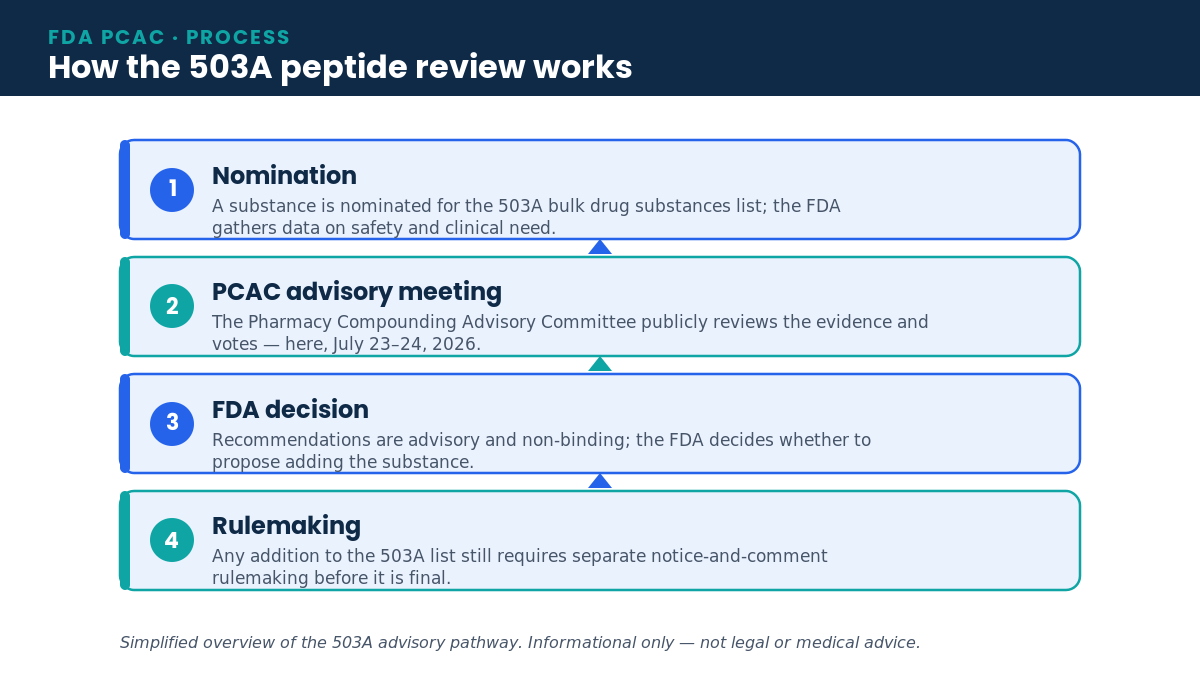
The Pharmacy Compounding Advisory Committee is a federal advisory committee that gives the FDA outside input on compounding questions. When the agency is deciding whether a bulk drug substance should be eligible for compounding, it can convene PCAC to publicly review the available evidence and vote. Crucially, those votes are advisory — they inform the FDA but do not bind it.
What “503A” means (and what it doesn’t)
Section 503A of the Federal Food, Drug, and Cosmetic Act covers traditional compounding pharmacies that prepare patient-specific medications against a prescription. In most cases, a compounder may only use a bulk drug substance if that substance appears on the FDA’s 503A bulk drug substances list (or meets another narrow exception). Being added to that list is not the same as FDA approval of a drug: it is a determination that the substance may be used in compounding, not that a finished peptide product has been proven safe and effective and cleared for marketing.
This distinction matters because removal of a peptide from a restrictive category, or a PCAC discussion about adding it, is sometimes described online as the peptide “becoming legal.” The reality is narrower and more procedural.
The seven peptides on the July 2026 agenda
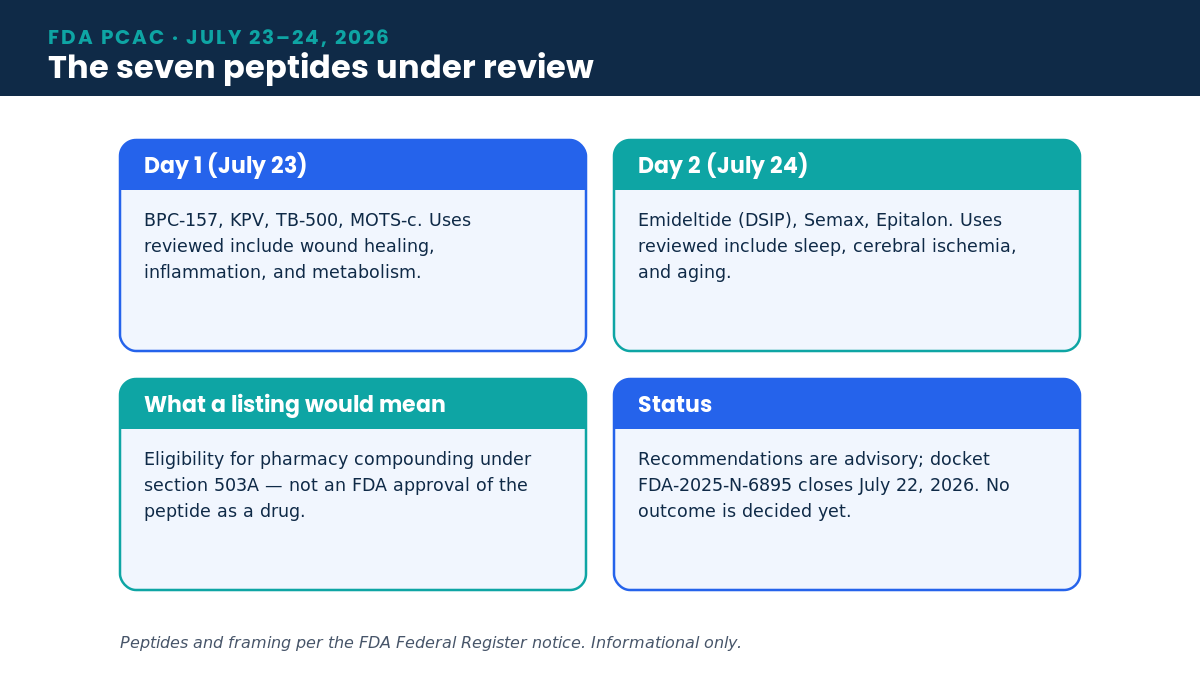
The July 23–24, 2026 meeting is scheduled to consider seven peptides. According to the FDA’s Federal Register notice, Day 1 (July 23) covers BPC-157, KPV, TB-500, and MOTS-c, and Day 2 (July 24) covers emideltide (DSIP), Semax, and Epitalon. The notice lists the specific uses being evaluated for each — for example, wound healing and inflammatory conditions for KPV, and cerebral ischemia for Semax.
What happens after the meeting
A PCAC recommendation is one step, not the finish line. Even if the committee recommends adding a peptide and the FDA agrees, putting it on the 503A list still requires separate notice-and-comment rulemaking, which under normal timelines can take many months or longer. The public docket for this meeting (FDA-2025-N-6895) is scheduled to close July 22, 2026, and the FDA typically posts briefing materials shortly before the meeting.
Why this matters for the research community
For people tracking the science and supply of research peptides, the PCAC process is one of the few transparent windows into how the FDA weighs evidence on these compounds. It does not change what any individual should do, and it is not medical guidance — but it does shape the regulatory backdrop. We cover each of the seven peptides individually in the VialHelp library, with sourced mechanism and evidence summaries.
Frequently asked questions
Does a PCAC recommendation make a peptide FDA-approved?
No. PCAC advises on compounding eligibility under 503A. That is separate from the FDA drug-approval process, and a listing would not mean a peptide is an approved medicine.
Is the outcome already decided?
No. As of this writing the meeting has not occurred and no decision has been made. Recommendations are advisory, and any change requires rulemaking afterward.
Related on VialHelp
Library pages for the peptides under review: BPC-157, TB-500, and more in the library. See also our peptide news updates and our guide on how to read a COA.
Sources: FDA PCAC Notice of Meeting (Federal Register, 2026); FDA Advisory Committee Calendar; FDA — 503A bulk drug substances.
Related reading
Reconstitution calculator · Peptide library · Guides & how-tos
Share this article
For informational and educational use only — not medical or legal advice. Intended for adults 21+.