
What Is Thymulin? The Zinc-Dependent Thymic Peptide Explained
Peptide science
Thymulin is a nine-amino-acid peptide produced by the thymus whose biological activity depends on zinc. It was once known as “facteur thymique sérique” (FTS), and it is studied mainly for its links to T-cell development and to the interplay between the immune and nervous systems.
What is thymulin?
Thymulin is a nonapeptide with the sequence pGlu-Ala-Lys-Ser-Gln-Gly-Gly-Ser-Asn. Its formula is C33H54N12O15 and its molecular weight is about 858.9 Da (PubChem). A review of the zinc-thymulin relationship describes it as a metallopeptidic hormone produced selectively by thymic epithelial cells, initially isolated from porcine serum and found in calf thymus extract (Dardenne and Pleau, 1994).
It is not the same molecule as the other thymic peptides on this site. Thymosin alpha-1 is a longer peptide covered in our Library entry, and the thymus itself and its peptides are introduced in the thymus gland and thymic peptides.
How thymulin is studied to work: the zinc connection
The defining feature of thymulin is its dependence on zinc. The same review reports that the peptide’s biological activity depends on zinc present in an equimolar ratio, that the resulting metallopeptide adopts a specific three-dimensional conformation, and that zinc has been demonstrated within the thymic epithelial cells that make it, suggesting it is secreted in its active, zinc-containing form. A 1988 study measured serum thymulin in human zinc deficiency (Prasad et al.), and a 1995 in vitro study reported that zinc induced thymulin secretion from human thymic epithelial cells (Saha et al.).

Reported effects in the research literature
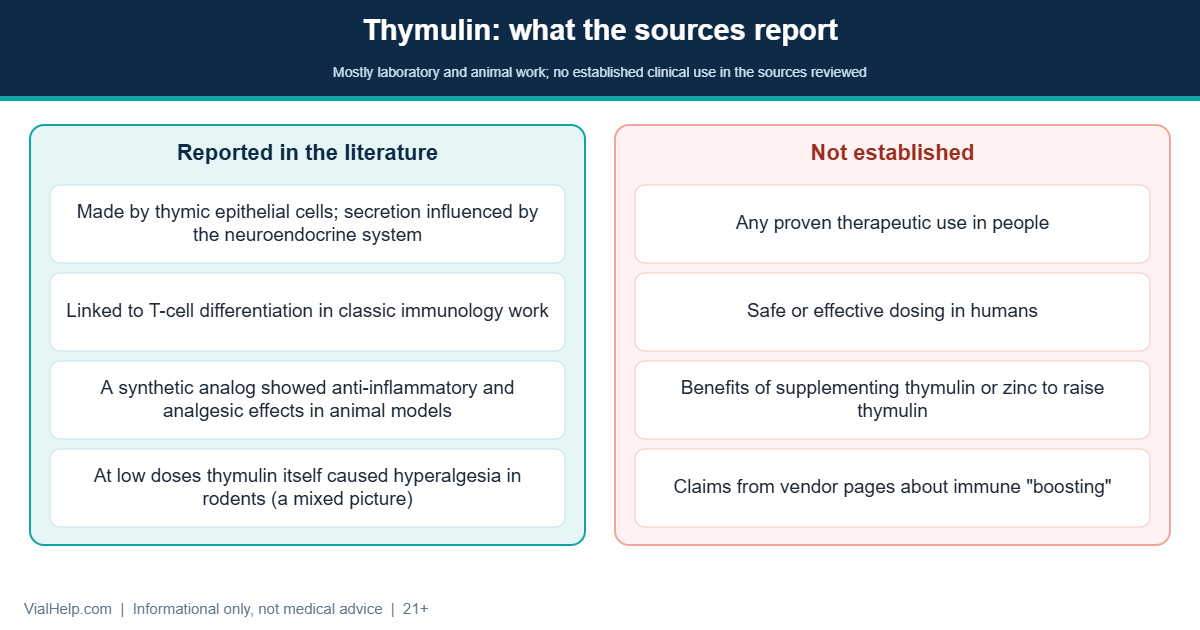
A 2014 review states that thymulin production and secretion are strongly influenced by the neuroendocrine system, and that thymulin and a synthetic analog showed anti-inflammatory and analgesic effects in the central nervous system and other organs in animal models (Reggiani et al., Curr Pharm Des 2014). Classic work links thymulin to intra- and extra-thymic T-cell differentiation.
The pain research is more mixed than headlines suggest. Dardenne and colleagues reported that at low nanogram doses, local or systemic thymulin caused hyperalgesia in rodents with an increase in proinflammatory mediators, whereas systemic injections of relatively high doses of thymulin, or of an analog peptide without hyperalgesic effect, reduced inflammatory pain in their experiments (Dardenne et al., 2006).
What the human evidence shows
In the sources reviewed for this article we found no established clinical evidence supporting a therapeutic use of thymulin in people. The 2014 review frames gene therapy to restore thymulin levels as a research aim, and its adenovector work was done in thymus-deficient (nude) mice, not patients. The human data we found are small serum-level studies, such as the zinc-deficiency study above. We could not verify regulatory status in a primary source, so this article makes no regulatory claim.
Cautions and considerations
Thymulin is a research peptide, and its small size and zinc dependence make quality and stability questions relevant to any laboratory work. Background on how peptides degrade is in peptide degradation and peptide half-life explained. Anyone with a health concern about immune function should speak with a clinician rather than rely on preclinical findings.
Frequently asked questions
Why does thymulin need zinc?
Reviews report that the peptide’s biological activity depends on zinc in an equimolar ratio, which gives it the specific three-dimensional shape needed to act.
Is thymulin the same as thymosin or thymalin?
No. They are different thymic peptides with different structures. See the Library entries for thymosin alpha-1 and thymalin.
Does thymulin decline with age?
Thymulin is often described as declining as the thymus involutes, but we could not confirm specific age-related figures in a primary source, so we do not quote any.
Is there clinical evidence for thymulin?
Not established in the sources reviewed. Most findings are biochemical or from animal models.
References
- Dardenne M, Pleau JM. Interactions between zinc and thymulin. Metal-Based Drugs 1994. PMID 18476235
- Dardenne M et al. Role of thymulin or its analogue as a new analgesic molecule. 2006. PMID 17192563
- Reggiani PC et al. Physiology and therapeutic potential of the thymic peptide thymulin. Curr Pharm Des 2014. PMID 24588820
- Prasad AS et al. Serum thymulin in human zinc deficiency. 1988. PMID 3262625
- Saha AR et al. Zinc induces thymulin secretion from human thymic epithelial cells in vitro. 1995. PMID 8582784
- PubChem compound record: thymulin (CID 71300623)
Informational only — not medical advice. This article is for educational purposes. It does not recommend, sell or instruct personal human use of any compound. Consult a qualified healthcare professional for any health decision. Content is intended for adults 21+. Verify scientific details against the primary sources cited.